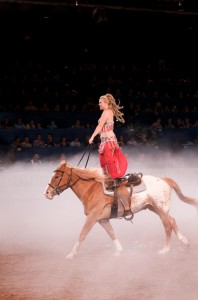
Brooks, an Appaloosa gelding.
The rich and fascinating history of the Appaloosa breed is as unique as its colorful spotted coat patterns. The Spanish introduced horses to Mexico in the 1500s. Following the Pueblo Revolt, horses rapidly spread throughout North America, reaching the Northwest around 1700. The Nez Perce tribe became excellent horsemen and breeders, creating large herds renowned for their strength, intelligence and beauty.
It is unknown how many of the Nez Perce’s horses were spotted, but a possible estimate is ten percent. Settlers coming into the area began to refer to these spotted horses as “A Palouse Horse”, as a reference to the Palouse River, which runs through Northern Idaho. Over time, the name evolved into “Palousey,” “Appalousey,” and finally “Appaloosa.”
In the late 1800s and early 1900s, interest in the breed gradually began to grow as Appaloosas began appearing in Western roundups and rodeos. The Appaloosa’s flashy coat patterns caught the eye of the public, and in 1937 an article in Western Horseman entitled “The Appaloosa, or Palouse Horse” revealed a widespread interest in the breed.
Today, the beautiful spotted horse is one of the most beloved of American horse breeds and can be found throughout the world, excelling in disciplines including western pleasure, games, working cow horse and dressage. Appaloosas are prized for their easy-going dispositions and their reliability as family horses.
(Breed History adapted from the Appaloosa Horse Club.)